Nitric Acid Factory Safety and Quality Checklist for Buyers
This article provides a practical safety and quality checklist for buyers sourcing Nitric Acid (HNO3 68%). It explains why nitric acid requires specialized due diligence because of its corrosive and oxidizing properties, and it outlines factory safety areas such as site layout, storage segregation, equipment integrity, ventilation, gas detection, emergency preparedness, personnel training, environmental controls, and transport safety. It also presents quality checks covering product specification, certificate of analysis, analytical methods, batch traceability, packaging, labeling, documentation, and supplier qualification. The article includes audit questions and common red flags, helping buyers verify that a supplier has real controls rather than general assurances. It further explains how a professional supplier such as Zhengzhou Mahaco Industrial Co., Ltd. (M.H.C) supports buyers through quality inspection, COA documentation, flexible packaging, logistics coordination, and a broad industrial chemicals portfolio. The final action plan encourages buyers to define specifications, request safety and quality documents, confirm traceability, check shipment details, and use third-party inspection where needed. The overall message is that nitric acid procurement should be based on documented safety and quality evidence, not price alone, so that buyers can reduce risk and maintain reliable supply.
Nitric Acid Factory Safety and Quality Checklist for Buyers
Nitric acid is one of the most widely used industrial inorganic acids, but it is also one of the most demanding products to source safely. Buyers who purchase Nitric Acid (HNO3 68%) for water treatment, metal processing, chemical synthesis, mining, or general manufacturing need more than a price comparison. They need a structured view of factory safety, product quality, documentation, packaging, and logistics. A reliable checklist helps buyers separate professional suppliers from traders who cannot demonstrate process control. This article presents a practical safety and quality checklist for buyers evaluating nitric acid factories and suppliers, with third-person guidance that can be used during supplier screening, site audits, and pre-shipment verification.
The checklist is not intended to replace a formal site audit or legal compliance review. Instead, it gives procurement teams a clear framework for asking the right questions. Nitric acid is corrosive and strongly oxidizing, and improper storage, handling, or transport can create serious risks. Buyers should therefore verify that the factory has suitable infrastructure, trained personnel, emergency systems, and batch-level quality records. The goal is to confirm that the supplier can deliver consistent HNO3 68% while protecting people, the environment, and the buyer’s own operations.
Why Nitric Acid Requires Specialized Buyer Due Diligence
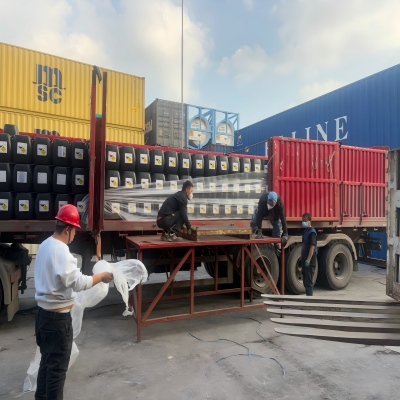
Nitric acid is not a commodity that can be evaluated on concentration alone. Even at 68% concentration, it can cause severe burns, react with organic materials, and generate nitrogen oxide vapors under certain conditions. A factory that handles nitric acid must control corrosion, ventilation, segregation, spill containment, and emergency response. Buyers should look for evidence that these controls are designed into the facility rather than added after an incident.
Hazard profile buyers must understand
Corrosive nature: direct contact can damage skin, eyes, and respiratory tissues.
Oxidizing behavior: contact with organic materials, reducing agents, or combustible substances can lead to violent reactions.
Vapor and mist exposure: nitrogen oxide fumes and acid mist require effective ventilation and monitoring.
Material compatibility: tanks, pipes, pumps, gaskets, and packaging must be compatible with HNO3 68%.
Transport risks: loading, unloading, and container selection must follow dangerous goods requirements.
What a checklist should achieve
A good checklist should create a documented trail. It should show what the buyer reviewed, what the supplier provided, what was verified during sampling, and what remains open before shipment. This is especially important when buyers source from international suppliers and cannot visit every factory. A checklist also helps compare multiple suppliers on the same criteria, reducing the risk of choosing a lower-priced but poorly controlled source.
Factory Safety Checklist
1. Site layout and access control
The factory layout should separate nitric acid storage and handling areas from offices, workshops, and combustible material stores. Buyers should confirm that access to acid areas is restricted and that visitors follow induction procedures. Clear signage, marked walkways, and dedicated loading zones are basic indicators of a controlled site.
Acid storage areas are clearly marked and restricted.
Traffic routes for tankers and forklifts are separated from pedestrian routes.
Emergency exits and assembly points are visible and unobstructed.
Spill kits, eyewash stations, and safety showers are accessible.
Site security prevents unauthorized entry to hazardous zones.
2. Storage and segregation
Nitric acid storage must be carefully segregated from incompatible materials. Organic chemicals, solvents, reducing agents, alkalis, metals, and combustible packaging should not be stored in a way that allows contact in the event of a leak. Tanks and containers should be placed within secondary containment, and floors should be acid-resistant and impermeable.
Dedicated tanks or containers are used for nitric acid.
Secondary containment is sized to hold leaks or spills.
Storage areas are ventilated and protected from direct sunlight and heat.
Incompatible materials are physically separated.
Containers are inspected for corrosion, leakage, and closure integrity.
Filling and sampling areas have drip trays and spill control.
3. Process safety and equipment integrity
Buyers should ask how the factory controls pressure, temperature, and flow during nitric acid handling. Pumps, valves, flanges, and transfer lines should be selected for acid service and included in a preventive maintenance program. Leak detection and inspection records are valuable evidence of equipment integrity.
Piping and equipment are compatible with HNO3 68%.
Maintenance schedules cover pumps, valves, hoses, and tanks.
Transfer operations use documented procedures.
Pressure and temperature controls are in place where applicable.
Leak detection and routine inspection records are available.
Hot work and confined space entry are controlled by permit systems.
4. Ventilation, gas detection, and emissions control
Nitric acid operations can release acid mist or nitrogen oxide vapors. Effective ventilation and scrubber systems are important, especially in filling, sampling, and tank venting areas. Buyers should ask whether gas detection is installed and how alarms are handled.
Filling and sampling areas have local exhaust ventilation.
Vent lines are routed to appropriate absorption or scrubbing systems.
Gas detection covers areas where NOx or acid mist may accumulate.
Alarm response procedures are documented and practiced.
Air emission controls are maintained and monitored.
5. Emergency preparedness
Emergency preparedness is a core part of supplier qualification. The factory should have written response plans for spills, leaks, exposure, fire, and transport incidents. Buyers should verify that emergency equipment is tested and that personnel know how to use it.
Spill response plan covers nitric acid specific hazards.
Eyewash stations and safety showers are tested regularly.
Fire response considers oxidizing and corrosive properties.
Emergency contacts and evacuation routes are posted.
Drills are conducted and recorded.
First aid and medical support arrangements are defined.
6. Personnel training and PPE
Well-trained operators are essential in nitric acid factories. Training should cover hazard communication, safe handling, PPE use, emergency response, and waste management. Buyers should confirm that PPE is appropriate and available, including chemical splash goggles, face shields, acid-resistant gloves, protective clothing, and respiratory protection where required.
Operators receive documented nitric acid safety training.
PPE is suitable for acid and oxidizer hazards.
Training records are maintained for each relevant worker.
Contractors receive site-specific safety induction.
Supervision is present during hazardous operations.
7. Environmental protection and waste management
Nitric acid factories should control wastewater, spent acid, rinsate, and contaminated packaging. Buyers should ask how wastes are neutralized, treated, or sent to licensed facilities. Environmental permits and monitoring records help demonstrate compliance.
Waste streams are identified and managed separately.
Spent acid and rinsate are neutralized under controlled conditions.
Waste contractors are licensed and traceable.
Wastewater treatment and monitoring records are available.
Environmental permits are current.
8. Transport, loading, and logistics safety
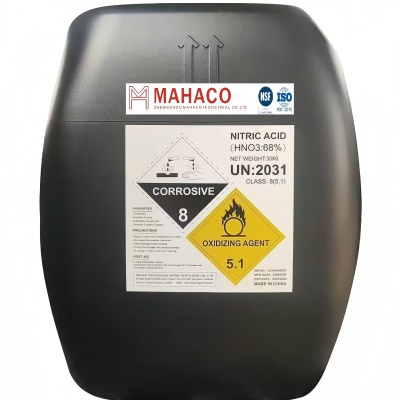
Nitric acid transport requires proper packaging, labeling, and vehicle selection. Loading and unloading areas should be controlled, and drivers should be informed of emergency procedures. Buyers should verify that the supplier provides correct dangerous goods documentation and that packaging is suitable for the intended route.
Transport classification and labels are correct.
Packaging is acid-resistant and approved for nitric acid.
Loading areas have spill control and emergency equipment.
Drivers receive relevant safety information.
Shipment documents match the product and packaging.
Container or tanker inspection is documented before loading.
Quality Checklist for Nitric Acid Buyers
1. Product specification and COA
Buyers should define the required specification for Nitric Acid (HNO3 68%) before ordering. The certificate of analysis should match the agreed specification and include batch number, production date, test results, and authorized sign-off. For critical parameters, the buyer should confirm the analytical method used.
Assay or concentration is reported clearly.
Appearance and color are described.
Impurities relevant to the application are tested.
Batch number and production date are traceable.
COA is issued against the correct specification.
Results are consistent across historical batches.
2. Analytical methods and laboratory capability
A factory without reliable laboratory control cannot guarantee batch consistency. Buyers should ask whether the supplier uses titration, density measurement, ion chromatography, or other suitable methods. For sensitive applications, third-party testing may be requested before shipment.
Laboratory equipment is calibrated.
Analysts are trained and records are maintained.
Methods are documented and repeatable.
Retained samples are kept for traceability.
Third-party inspection can be arranged when required.
3. Batch traceability and records
Traceability connects the delivered product to raw materials, production, testing, packaging, and shipment. Buyers should be able to link each container to a batch record and COA. This is important for quality complaints, regulatory checks, and customer audits.
Batch records include production and testing data.
Packaging records show container and label details.
Shipment records link batch numbers to invoices and packing lists.
Complaint handling and corrective action records are available.
4. Packaging, labeling, and documentation
Nitric acid packaging must be compatible with the product and suitable for international transport. Labels should include hazard information, product name, concentration, batch number, net weight, and supplier details. Buyers should confirm that the supplier can provide MSDS or SDS, COA, commercial invoice, packing list, and customs clearance support.
Packaging is clean, sealed, and suitable for HNO3 68%.
Labels include GHS hazard information and batch details.
MSDS or SDS is current and in the required language.
COA is provided for each batch.
Shipping documents match the order and packaging.
Packaging options meet the buyer’s handling and storage needs.
5. Supplier qualification and audit trail
Supplier qualification should combine document review, sample testing, and, where possible, a site audit. Buyers should look for a supplier with clear quality control responsibilities, established manufacturer relationships, and a record of repeat business. A professional supplier should be able to explain how nonconforming products are handled and how corrective actions are verified.
Supplier has a documented quality control process.
Manufacturer relationships are stable and verifiable.
Nonconformance and corrective action systems exist.
Customer references or repeat order history can be reviewed.
Audit findings are closed with evidence.
Audit Questions Buyers Should Ask
During supplier discussions, buyers can use targeted questions to test whether safety and quality systems are real. The answers should be specific and supported by records, not general statements.
How is Nitric Acid (HNO3 68%) stored and segregated from incompatible materials?
What secondary containment is provided around tanks and filling areas?
Which materials are used for tanks, pipes, gaskets, and pumps?
How are NOx vapors and acid mist controlled during filling and sampling?
What emergency equipment is available, and how often is it inspected?
How are operators trained and how are training records kept?
What analytical methods are used for concentration and impurities?
Can the supplier provide COA, MSDS, and batch traceability records?
How are packaging and labels checked before shipment?
What is the process for handling quality complaints or transport incidents?

Common Red Flags in Nitric Acid Sourcing
COA results are generic and cannot be linked to a batch.
Safety questions receive vague answers without records.
Nitric acid is stored near organic materials or combustibles.
Packaging or labels do not match the declared product.
The supplier cannot provide current MSDS or SDS documentation.
Emergency equipment is missing, blocked, or untested.
Batch records or traceability are unavailable.
Transport documents are inconsistent with the shipment.
How a Professional Supplier Such as Mahaco Supports Buyer Compliance
Zhengzhou Mahaco Industrial Co., Ltd. (M.H.C) is a professional supplier and manufacturer of high-quality industrial chemicals serving clients worldwide. Based in Zhengzhou, a major transportation hub in Central China, the company has built a position as a reliable partner in the global chemical supply chain. For buyers of nitric acid, this type of supplier structure can support both safety documentation and commercial reliability.
M.H.C supplies Nitric Acid (HNO3 68%) within a broad industrial chemicals portfolio that includes water treatment chemicals, detergent and cosmetic raw materials, industrial inorganic acids and alkalis, solvents, and specialty additives for mining, food, and general manufacturing. The company serves industries such as water treatment, cosmetics and detergents, mining, food processing, and industrial manufacturing. This breadth allows buyers to consolidate sourcing while still focusing on product-specific quality checks for critical items such as nitric acid.
Quality control is a central part of the M.H.C approach. The company maintains long-term relationships with reputable manufacturers and implements strict inspection processes before shipment. For critical specifications, certificates of analysis are provided for customer verification, and documentation can include MSDS, COA, commercial invoices, and customs clearance support. Flexible packaging options such as drums, IBC totes, and other formats can be discussed according to customer requirements and product suitability.
Logistics is another practical advantage. Zhengzhou provides access to rail, road, and air freight networks, supporting efficient delivery to major Chinese ports and international destinations. For nitric acid buyers, reliable logistics coordination must still be matched with correct dangerous goods handling, packaging, and documentation. A supplier with established quality control and customer service teams can help reduce delays and improve communication during pre-shipment checks.
M.H.C also brings experience across water treatment chemicals such as Poly Aluminium Chloride, Poly Ferric Sulphate, PolyDADMAC, Aluminium Sulphate Ironless 17%, Sodium Hexametaphosphate, and Activated Alumina. In detergent raw materials, the portfolio includes SLES, STPP, TSP, sodium silicate variants, AEO, and Oxalic Acid. In industrial acids and alkalis, products include Nitric Acid (HNO3 68%), Phosphoric Acid 85%, Hydrogen Peroxide, Caustic Soda, Potassium Hydroxide, Sodium Sulphate Anhydrous, Ammonium Chloride, and various solvents. Specialty products include Zinc Sulphate, Manganese Sulfate, Hexamine, Paraformaldehyde, Aluminium Hydroxide, and Lactic Acid. This one-stop sourcing model can reduce procurement complexity, but buyers should still apply the same rigorous safety and quality checklist to every critical product.
Final Buyer Action Plan
Define the nitric acid specification and critical impurities before requesting quotations.
Request COA, MSDS or SDS, packaging details, and transport classification from each supplier.
Review factory safety information and ask for evidence of storage segregation, ventilation, and emergency response.
Confirm batch traceability and sampling arrangements before shipment.
Check labels, packaging, and shipping documents against the purchase order.
Use third-party inspection or testing for high-risk or high-value orders.
Keep a documented checklist for every supplier and every shipment.
Review supplier performance after delivery and record any deviations for future sourcing decisions.
Conclusion
Nitric acid sourcing requires a disciplined approach to safety and quality. Buyers should not rely on price alone or on general assurances from a supplier. A practical checklist covering site safety, storage, equipment integrity, emergency preparedness, personnel training, environmental controls, transport, product specification, COA, traceability, packaging, and documentation provides a stronger basis for supplier selection. When used consistently, this checklist helps buyers reduce risk, protect their operations, and build long-term relationships with reliable chemical suppliers.
For international procurement teams, the best nitric acid supplier is one that can demonstrate control at every stage: from factory handling and batch testing to packaging, labeling, and shipment. A structured checklist turns those expectations into verifiable questions and records, making the buying decision more transparent and more defensible.