How Does Sodium Lauryl Ether Sulfate Impact Product Viscosity
In the ever-evolving landscape of personal care and cleaning product formulation, viscosity remains a pivotal parameter influencing not only product performance but also consumer perception. One of the most commonly used surfactants in these industries is Sodium Lauryl Ether Sulfate (SLES). As a leading supplier and manufacturer, Zhengzhou Mahaco Industrial Co.,Ltd (MAHACO) is at the forefront of providing high-quality SLES and expertise to partners worldwide. In this article, we explore how SLES impacts product viscosity and why it is a critical consideration for formulators.
Understanding Sodium Lauryl Ether Sulfate (SLES)
Sodium Lauryl Ether Sulfate is an anionic surfactant widely used in detergents, shampoos, soaps, and other personal care products. Its popularity stems from its excellent foaming abilities, effective cleaning power, and compatibility with a wide range of ingredients. At MAHACO, we recognize the importance of SLES as a versatile ingredient that not only enhances cleaning efficacy but also plays a crucial role in determining the rheological properties of formulations, especially viscosity.
The Science Behind SLES and Viscosity
Viscosity, in simple terms, is a measure of a fluid’s resistance to flow. In product formulations, achieving the right viscosity is essential for ensuring stability, ease of application, and consumer satisfaction. SLES, due to its molecular structure, can significantly influence the viscosity of aqueous solutions. When dissolved in water, SLES molecules arrange themselves to form micelles, which interact with each other and other formulation components, altering the overall viscosity.
Concentration Dependency: The viscosity of a product increases with SLES concentration up to a certain point. Beyond this, further increases may lead to a decrease in viscosity due to micelle saturation and structural changes.
Electrolyte Sensitivity: The addition of electrolytes such as sodium chloride (common salt) can further modify viscosity. This is a common practice in shampoo and liquid soap manufacturing, where salt is used to fine-tune product thickness.
Interaction with Other Surfactants: Blending SLES with other surfactants, such as Cocamidopropyl Betaine, can synergistically enhance viscosity, allowing formulators to achieve desired textures without excessive use of thickeners.
MAHACO’s Approach to SLES Quality and Viscosity Control
At Zhengzhou Mahaco Industrial Co.,Ltd, we understand that consistent product quality is paramount. Our SLES is manufactured to stringent specifications, ensuring uniformity in ethoxylation degree, purity, and active matter content. These factors are critical because even minor variations can lead to significant differences in viscosity, affecting product performance and consumer experience.
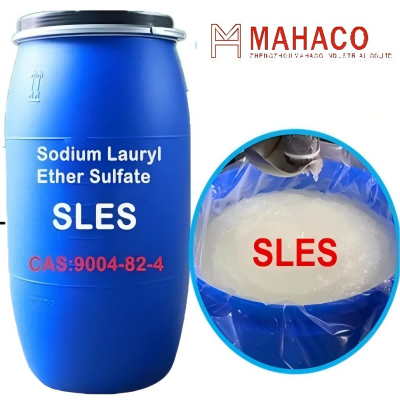
MAHACO’s technical support team works closely with clients to optimize formulations, providing guidance on SLES concentration, interaction with other ingredients, and strategies for viscosity adjustment. This collaborative approach helps our partners maintain product consistency even as market demands and raw material sources evolve.
Industry Trends: Viscosity and Consumer Preferences
The personal care and cleaning industries are witnessing a shift towards customization and sensory appeal. Consumers now expect products that not only perform well but also provide an enjoyable user experience, which is often linked to viscosity. For example, a shampoo that is too runny may be perceived as low quality, while one that is too thick may be difficult to dispense. MAHACO’s expertise in SLES and viscosity management enables brands to strike the perfect balance, enhancing both functionality and marketability.
Latest Developments: SLES Alternatives and Sustainable Formulation
With the growing emphasis on sustainability and skin-friendly ingredients, formulators are exploring SLES alternatives and blends that offer similar viscosity control with improved biodegradability or reduced irritation potential. However, SLES remains a benchmark for performance and cost-effectiveness. MAHACO is actively involved in research and development, offering both traditional SLES and innovative alternatives to meet diverse formulation needs.
Industry-Related Insights: The Role of Surfactants in Modern Formulation
The surfactant industry is experiencing rapid innovation, driven by regulatory changes, environmental concerns, and consumer awareness. While SLES continues to dominate the market due to its reliability and affordability, there is increasing interest in plant-based surfactants and sulfate-free systems. These alternatives often require different strategies for viscosity adjustment, sometimes necessitating the use of additional rheology modifiers or co-surfactants. MAHACO’s broad portfolio and technical expertise ensure that clients can navigate these changes without compromising product quality.
Key Considerations for Formulators
Achieving optimal viscosity with SLES involves more than just adjusting concentration. Factors such as water hardness, pH, the presence of other surfactants, and the use of thickeners or salts all play a role. MAHACO recommends a systematic approach to formulation development, including:
Conducting laboratory-scale trials to determine the ideal SLES concentration for target viscosity
Monitoring the impact of electrolytes and other additives
Evaluating the compatibility of SLES with fragrance, colorants, and active ingredients
Stability testing under varying temperature and storage conditions
Keyword Focus: Sodium Lauryl Ether Sulfate & Surfactant
As a trusted supplier, MAHACO ensures that every batch of Sodium Lauryl Ether Sulfate meets international standards for quality and performance. Our deep understanding of surfactant science allows us to support customers in achieving the ideal viscosity for their applications. Whether you are formulating a new shampoo, liquid detergent, or specialty cleanser, the right choice of surfactant is crucial for product success.
By leveraging MAHACO’s expertise and premium SLES, formulators can confidently create products that meet both technical specifications and consumer expectations. For more information on our SLES offerings and formulation support, visit our news page or contact our technical service team today.
Conclusion
Sodium Lauryl Ether Sulfate remains a cornerstone ingredient for viscosity control in personal care and cleaning products. Zhengzhou Mahaco Industrial Co.,Ltd (MAHACO) combines high-quality SLES supply with technical know-how, empowering partners to deliver products that stand out in a competitive market. As the industry evolves, MAHACO continues to innovate, ensuring that clients are equipped with the best surfactant solutions for every challenge.
Stay tuned to MAHACO’s news page for the latest updates on surfactant trends, formulation tips, and product innovations.
Tags:lactic acid,poly ferric sulphate pfs,calcium aluminate,ferrous sulphate